Municipal Assessment Versus Market Value in Gatineau: What Buyers Need to Know
If you’re buying a home in Gatineau, it’s essential to understand the difference between municipal assessment vs market value. Knowing this can save you thousands.
There are two concepts you need to know: municipal assessment and market value. Understanding the differences between these key terms is crucial for buyers to accurately evaluate property values and make informed real estate decisions.
Key terms to know include: assessed value, market value, and municipal assessment.
Introduction to Property Assessment
Property assessment is a foundational concept in the real estate market, especially when it comes to understanding how the value of a property is determined for property tax purposes. In Gatineau, as in many cities, the municipal assessment is an official estimate of a property’s value, calculated by the local government.
This value is used to determine the amount of property tax a homeowner will pay, but it’s important to recognize that it’s not always the same as the price a property would fetch on the open market.
The market value, on the other hand, is what a buyer is willing to pay for a property in the current real estate market. This figure is influenced by a variety of factors, including recent sales of similar properties, current market conditions, and the unique features of the home.
Understanding the difference between municipal assessment and market value is key for anyone looking to buy, sell, or simply understand the value of a property. Throughout this article, we’ll break down these key terms and concepts, helping you navigate the real estate market with confidence and clarity.
What Is a Municipal Assessment in Gatineau?
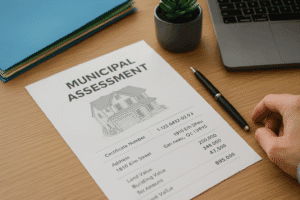
A value determined by the City of Gatineau through a municipal property assessment, which is the official evaluation conducted by the city for tax purposes.
Updated every three years and based on past sales data, property size, and location. The municipal evaluation is a standardized process performed every three years.
Used to calculate municipal and school taxes, not to set selling prices. The results of the municipal evaluation are recorded in the assessment roll, which is updated periodically.
May be lower or higher than the actual price buyers are willing to pay.
Municipal property assessment is primarily used for tax assessment and calculating property taxes, and it may not reflect current market conditions.
Receiving an Assessment Notice
When you receive an assessment notice from the city, it’s more than just another piece of mail—it’s an important document that can affect your property tax bill and your understanding of your home’s value.
The assessment notice outlines the assessed value of your property, which is the figure the city uses to calculate your property tax. It also includes details about your property, such as square footage, recent improvements, and any unique features that may impact its value.
It’s essential to review your assessment notice carefully.
Check that all the information is accurate and reflects any changes you’ve made to your property, like renovations or additions. If you believe the assessed value doesn’t match the true market value of your home, or if there are errors in the details, you have the right to contact the city assessor to discuss your concerns.
Understanding the factors that influence your assessed value can help you make informed decisions about your property and ensure you’re not overpaying on property taxes.
How Is Market Value Determined?
Based on what a buyer is willing to pay today in the current market.
Influenced by supply and demand, interest rates, and neighborhood trends.
Realtors use comparables (recent sales of similar homes) to estimate it.
A market value assessment considers current market conditions and recent sale prices of nearby properties to provide an estimated market value for buyers and sellers.
Can change quickly, unlike a municipal assessment that updates slowly.
Calculating Assessed Value
Calculating assessed value is a foundational step in determining your property taxes in Gatineau.
The city assessor uses a standardized approach, evaluating general criteria such as your property’s location, type, lot size, living area, year built, and the number of bedrooms and bathrooms. To estimate a property’s value, the city relies on sales data from similar properties—often called comparables or nearby properties—within your neighbourhood.
However, it’s important to remember that this method doesn’t always reflect the current market value.
The assessed value may not account for recent improvements, renovations, or unique features that set your home apart from others. In a real estate market where property values can shift quickly due to current market trends, relying solely on assessed value can be misleading.
Factors like recent sale prices of comparable properties, changes in the local real estate market, and the overall condition of your property all play a role in determining the true value of a property. Understanding how assessed value is calculated helps you make sense of your property taxes and how they relate to your home’s current market value.
The Role of a Certified Appraiser
A certified appraiser is a key player in determining the fair market value of a property. Unlike municipal assessments, which use broad criteria, a certified appraiser conducts a detailed evaluation using several methods, such as the sales comparison approach (analyzing recent sales of similar properties), the income approach, and the cost approach.
They consider several factors, including the property’s condition, location, and unique features, to provide an accurate and reliable indicator of its market value.
In the context of a real estate transaction, a certified appraiser’s expertise is invaluable.
Their assessment reflects current market trends, recent sales, and the specific characteristics that influence the value of a property. This professional opinion helps both buyers and sellers determine a fair market value, ensuring that the property is priced appropriately for the current real estate market. Relying on a certified appraiser can give you confidence that you’re making informed decisions based on the most probable price your property could achieve in today’s market.
Why Municipal Assessment vs Market Value in Gatineau Matters for Buyers
The property assessment is the city’s official valuation, giving you an idea of the city’s valuation, but it doesn’t tell the full story.
The property’s market value reflects what you’ll actually pay or receive in a real transaction. The property’s market value is influenced by various factors, including current trends and the property’s market.
Buyers risk overpaying if they assume assessment equals market value. There are important differences between municipal assessment and market value, and these differences can affect potential buyers by impacting their perception of a property’s worth.
Smart buyers use both numbers. In a seller’s market, many buyers may be willing to pay more than the assessed value:
Assessment → to understand taxes.
Market value → to negotiate and make the right offer.
A municipal assessment is the value assigned to your property by the city or municipality. In Gatineau, assessments are updated every three years and are mainly used to calculate your property taxes.

Key Facts:
Based on mass evaluation techniques, not individual appraisals. Municipal assessments are often based on data from the previous year, which may not reflect current market conditions.
Relies on past sales data, not current market conditions. A well maintained home with greater square footage may have a higher market value than its assessed value.
May be lower (or sometimes higher) than today’s real selling price. The appraised value and the value of your home can differ from the home’s assessed value, especially in a higher market.
Example:Your home might have a municipal assessment of $350,000 in Gatineau. That doesn’t mean a buyer will pay that price. It’s simply the value the city uses to determine your annual taxes. Note: the assessed value is not necessarily the appraised value or the true value of your home in the current market.
Factors influencing market value:
Recent sales of similar properties (comparables).
Upgrades, renovations, or staging.
Property’s unique features.
Recent improvements.
Location and neighborhood appeal.
Local economic conditions, interest rates, and buyer demand.
The property’s specific characteristics, such as unique features and recent improvements, can significantly impact its market value.
Why the Numbers Are Different
It’s normal to see a gap between municipal assessment and market value.
Timing gap → Assessments are updated every few years, while the market changes monthly. The appraised value and market value assessment may differ from the municipal assessment because they reflect current market conditions and recent sales, whereas municipal assessments are often outdated.
Generic method → Assessments are calculated with formulas that don’t consider your new kitchen, finished basement, or curb appeal.
Market dynamics → A hot seller’s market, like we’ve seen in Gatineau/Ottawa in 2021–2022, can push prices far above assessed values. The differences between appraised value, market value assessment, and municipal assessment can significantly affect the sale price, as each method uses different criteria and timing to determine a property’s worth.
Example from Outaouais:According to the Quebec Federation of Real Estate Boards (QFREB), the median price of single-family homes in Gatineau rose by nearly 12% in 2022, while municipal assessments lagged behind by years.
Local Statistics: Gatineau & Ottawa
In 2024, the average sale price of a single-family home in Gatineau was around $440,000 (source: Centris).
Many homes had municipal assessments closer to $350,000–$380,000, showing a 15–25% difference.
In Ottawa, the average home price in 2024 was approximately $680,000, while assessed values were often lower, especially in fast-growing neighbourhoods
This gap shows clearly: municipal assessments rarely match what buyers actually pay. In a seller’s market, homes often achieve a higher market value than their assessed value, and the asking price should reflect current market values to attract buyers.
Municipal assessment plays a direct role in determining your property taxes. The assessed value assigned to your property by the city is used as the basis for calculating your annual property tax bill. This means that any changes in your property’s assessed value can significantly impact your financial obligations as a homeowner.
Property taxes are essential for funding local services such as schools, emergency services, and infrastructure. In a strong real estate market, where property values are rising, you may notice your property taxes increase as well, reflecting the higher assessed value of your home. Conversely, if the market cools and property values decrease, your property taxes may go down. Understanding how municipal assessment affects your property taxes helps you anticipate changes in your expenses and plan your budget accordingly.
Which Number Should You Trust?
When selling, the market value is the only number that matters. Buyers don’t care about your municipal assessment in general — they care about whether your home is priced fairly compared to others for sale.
Setting the right price through accurate pricing strategies is essential to attract potential buyers in the open market.
That’s why real estate agents perform a Comparative Market Analysis (CMA) to provide an accurate selling price range based on:
Active listings in your area.
Recent sales of similar properties.
Market trends and buyer demand.
A real estate agent can help you accurately determine the right price for your home by analyzing current market data and pricing trends.
Quick tip: If you price your home strictly based on your municipal assessment, you could leave tens of thousands of dollars on the table
Disputing Assessed Value
If you believe your property’s assessed value is too high or doesn’t reflect recent changes, you have the right to dispute it. The first step is to contact the city assessor to discuss your concerns and provide evidence, such as recent sales data of comparable properties, documentation of recent improvements, or information about unique features that may affect your home’s value.
If you’re not satisfied with the response, you can file a formal complaint with the Assessment Review Board (ARB). The ARB will review your case, considering the factors and evidence you present, and may adjust your assessed value if warranted.
Successfully disputing an assessed value can significantly impact your property taxes and ensure that your assessment more accurately reflects the current market value of your property. Understanding the differences between municipal assessment and market value is crucial in this process, as it helps you build a strong case and protect your financial interests.
Frequently Asked Questions (FAQ)
1. My municipal assessment is higher than market value — what does that mean?This can happen in a slow market. If demand drops, market value may fall below the last assessment. It doesn’t mean you can’t sell, but you may need to adjust expectations. Note that a tax assessment may not reflect your property’s current market value, and differences can arise due to changes in the real estate market.
2. Do buyers look at municipal assessments before making an offer?Yes and No. Most buyers rely on recent comparable sales, not tax assessments. However, they may notice it when reviewing property tax details. Buyers may also review the property assessment and compare it to current market values to better understand the property’s worth.
3. Can I contest my municipal assessment?Yes. In Gatineau, you can request a review if you believe your assessed value is too high, which could lower your property taxes. Contesting a property assessment or tax assessment can affect your property taxes but does not necessarily change your property’s market value when selling.
4. Does a low assessment hurt me when selling?No. If anything, it may help by keeping your taxes lower. Buyers care about current market value, not municipal numbers. Differences between assessed value and market values are common and do not impact the property’s true value.
Key Takeaway
Municipal assessment = property taxes.
Market value = real selling price.
When selling your home in Gatineau or Ottawa, don’t rely on the number on your tax bill. Instead, get a professional market evaluation or a free home value report to know exactly what buyers are willing to pay today. For the most accurate property valuation and market value assessment, it is recommended to consult a professional appraiser who can provide an expert evaluation based on current market conditions and comparable sales.
Thinking of selling your home in Gatineau or Ottawa? Get your free home valuation from QuickAgentMatch.com today. We’ll connect you with top local agents who know exactly how to price your home for maximum results.